The short answer: When your son doesn’t want to go back to boarding school, the resistance you’re hearing is usually one of four patterns. Most boarding school students experience some resistance to returning in the weeks before their second year — particularly mid-July through early August. According to FUMA’s Dean of Students, this resistance is typically not about the school. It is about the comfort of home, summer freedom, and the natural adolescent reflex to negotiate. Parents who hold the decision firmly while listening attentively report the strongest outcomes — but the right answer depends on what your son is actually saying underneath the words.
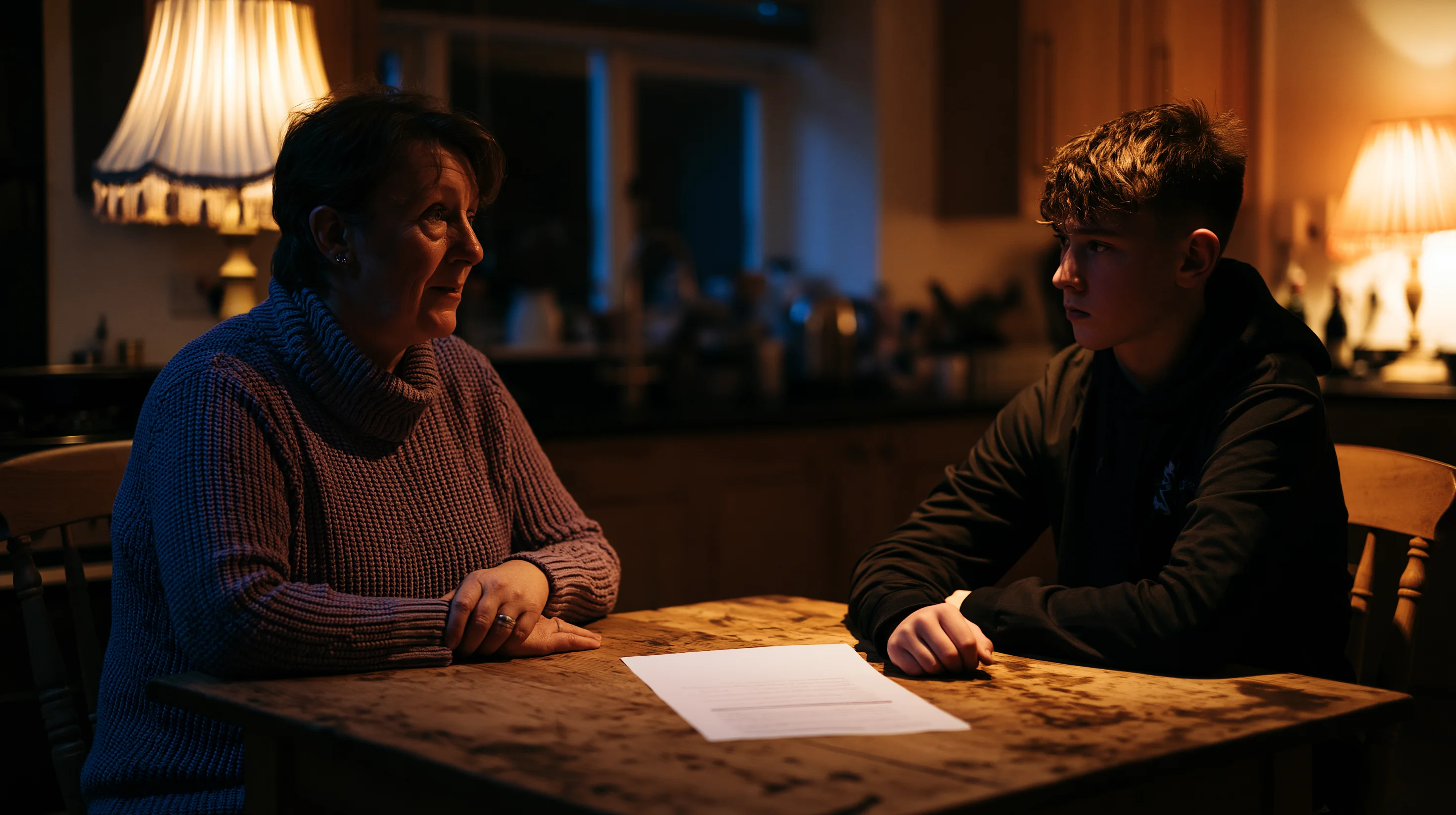
It is 11:00 PM on a Wednesday in late July. The re-enrollment form is on the counter. It has been there for nine days. Your son had a great spring. Better grades than the freshman year at his old school. Two new friends he now texts on weekends. A posture you did not recognize until you saw it at graduation in May.
But it is the third week of July. He has friends at the pool. He has a girl who texts. He has not put on a button-down in twenty days. And tonight he said it across the kitchen island, between bites of leftover pasta, without making eye contact:
“I don’t want to go back.”
You don’t know if he means “I’m done,” or “summer is hard to give up,” or “I’m testing whether you’ll let me out.”
This guide is for that parent, on that night, with that form on the counter. It was written with [DEAN OF STUDENTS NAME], Fork Union’s Dean of Students, who handles this conversation [VERIFY: dozens / hundreds of times] each year.
Yes.
The Dean has a name for it: the summer second-guess.
Most current FUMA cadets express some resistance to returning between mid-July and August 1. The pattern is so consistent that the Dean’s office tracks it. The reasons are predictable:
That does not mean every resistance is the same. The next section sorts the kinds.

The Dean’s office sees four patterns. Most parents who walk into the conversation can recognize their son’s version within ten minutes of listening carefully.
Translation: Summer is good. He is not done with the school.
The signal: Vague, defensive, easy to push back on. He says it once, then moves on. He still eats breakfast like normal. He still asks what’s for dinner.
Parent move: Sit with him. Don’t argue. Don’t pull the form. Re-engage him with the school in concrete ways — call a friend from the Corps to make a plan, drive past campus on the way to something else, plan a small pre-departure ritual.
Translation: A negotiation reflex. He is not committed to leaving; he wants to see if the door is open.
The signal: He is saying it once a day, but eating breakfast like normal. He is still texting his roommate. He has not, when pressed, named a single specific concern.
Parent move: Calm clarity. “I hear you. We’re going back. Here’s why.” Hold the line. He will mostly stop saying it after the second week of the school year.
Translation: A real concern under the surface. Bullying. An unaddressed academic struggle. A roommate conflict. A coach issue. Sometimes something more serious.
The signal: Specific. Repeated. With edge. Often will not make eye contact. The complaint focuses on a person, a class, or an incident.
Parent move: Stop everything. Call the Dean of Students. Tell the Dean exactly what your son said. Schedule a conversation between your son and his Tactical Officer. Do not make the re-enrollment decision until the specific thing is named and addressed.
Translation: A real maturation has happened, and FUMA is not the right next chapter. This is rarer than the others, but it is real.
The signal: Clear, calm, repeated over multiple conversations across multiple weeks. He has reasons. He has a plan, even if it’s incomplete.
Parent move: Take this seriously. Schedule a family meeting with the Dean and the Academic Office. If this is what it is, the right answer may be a graceful transition — and FUMA will support that with grace.
[QUOTE: 120 words from the Dean. Real, on-record. Procure pre-publish. Draft below for SME review.]
“I get one of these calls every other day in late July. Most of the time, the conversation reveals that the resistance is real but small — summer freedom is hard to give up, and your son is doing what teenagers are wired to do. Sometimes, though, the call surfaces something we need to know about. Either way, calling us before you fill out the form is the right move. We can usually tell the difference within fifteen minutes.”
— [DEAN OF STUDENTS NAME], Dean of Students, Fork Union Military Academy
If you are going to have this conversation tonight — or this week — here is the framework:
Pick the right time. Not at the kitchen counter at 11 PM. Drive somewhere together. Phones in the back seat. Forty minutes of mostly silent driving and then twenty minutes of talk.
Ask one question and then be quiet. “Tell me what going back actually feels like to you.” Then wait. Do not fill the silence. He will eventually.
Don’t argue facts. He will minimize his good year. He will tell you the grades didn’t matter. Don’t list the grades back at him. Let him feel heard before you push back on anything.
Name the timeline. “I am going to send the form on Friday. Between now and Friday, I want to understand what you mean.” This gives him a runway to think and a deadline to grow up against.
Call the Dean if you hear anything specific. That is what they are there for. A 15-minute Dean’s-office call is the highest-leverage move available in this week.
Don’t promise what you don’t mean. Don’t say “If you really hate it, you can come home in October” unless you mean it. Conditional commitments destroy second-year outcomes.
For peer-authoritative context on adolescent home/away transitions, the American Academy of Pediatrics publishes parent guidance through HealthyChildren.org — worth reading before any major school decision involving your teen.
Be honest. Pull him if:
The Dean will help you make this call honestly. So will the Director of Admissions. Both would rather facilitate a graceful transition than lose your trust by pushing through a decision the family does not actually believe in.
Most parents who walk this carefully report that the resistance peaks around July 25, plateaus through July 31, and is gone by September 10.
The strongest predictor of a good second year is a calm, listened-to July.
The First-Year Boarder’s Survival Guide for Parents covers the full second-year transition — pre-arrival prep, the first 30 days back, the homesickness wave, the holidays, and re-entry. It is the document the Dean recommends to every family in this week.
Download the First-Year Boarder’s Survival Guide (PDF).
The conversation you are dreading tonight is not the verdict on the school. It is the negotiation of growing up.
Hold it carefully.
Hold the form, too.
Is it normal for a boarding school student to not want to go back? Yes. Most boarding school students express some resistance to returning, typically peaking between mid-July and early August. According to Fork Union Military Academy’s Dean of Students, the resistance is usually about giving up summer freedom rather than a verdict on the school itself. Resistance that is specific, repeated, and named — about a particular conflict, fear, or struggle — warrants a direct conversation with the school’s Dean before making the re-enrollment decision.
When should I pull my son out of boarding school? A boarding school transition is appropriate when (1) specific, verifiable concerns have not been adequately addressed by the school, (2) your son requires care the school cannot provide, (3) the financial commitment is no longer sustainable, or (4) your son’s clear, calm, repeated assessment — across weeks, not days — is that the school is not the right next chapter. Vague resistance during a particular summer week is rarely sufficient grounds.
What should I do when my son says he doesn’t want to go back? Pause. Don’t argue facts. Ask one open question and listen. If he names something specific (a conflict, a fear, an academic struggle), call the school’s Dean of Students before making the re-enrollment decision. If the resistance is vague and general, it is most likely the natural reluctance to give up summer freedom — common and usually temporary.
When does FUMA require re-enrollment commitment? Re-enrollment deadlines vary by year. Most current families receive re-enrollment paperwork in late spring with summer deadlines. Contact FUMA’s Admissions Office for current-cycle dates and any extensions available when a family is working through a re-enrollment decision.
Will FUMA help if we decide to leave? Yes. FUMA’s Admissions and Academic Offices support graceful transitions, including transcript delivery, recommendation letters, and conversations with the receiving school. The school’s interest is the long-term flourishing of the cadet, not a one-year enrollment number.
This post was reviewed by [DEAN OF STUDENTS NAME], Dean of Students at Fork Union Military Academy. If you are working through a re-enrollment decision, the Dean’s office welcomes a direct call. Contact the Dean’s Office.