The short answer: What does a day in the life military boarding school look like? A typical day at Fork Union Military Academy Summer Academy begins with reveille at 6:00 AM and ends with taps at 10:00 PM. Cadets follow a structured 16-hour schedule that includes morning formation, three academic class periods, two meals in formation, two hours of athletics, a study hall, and supervised free time. Sundays follow a modified schedule centered on chapel and rest.
The bugle sounds at 6:00 AM.
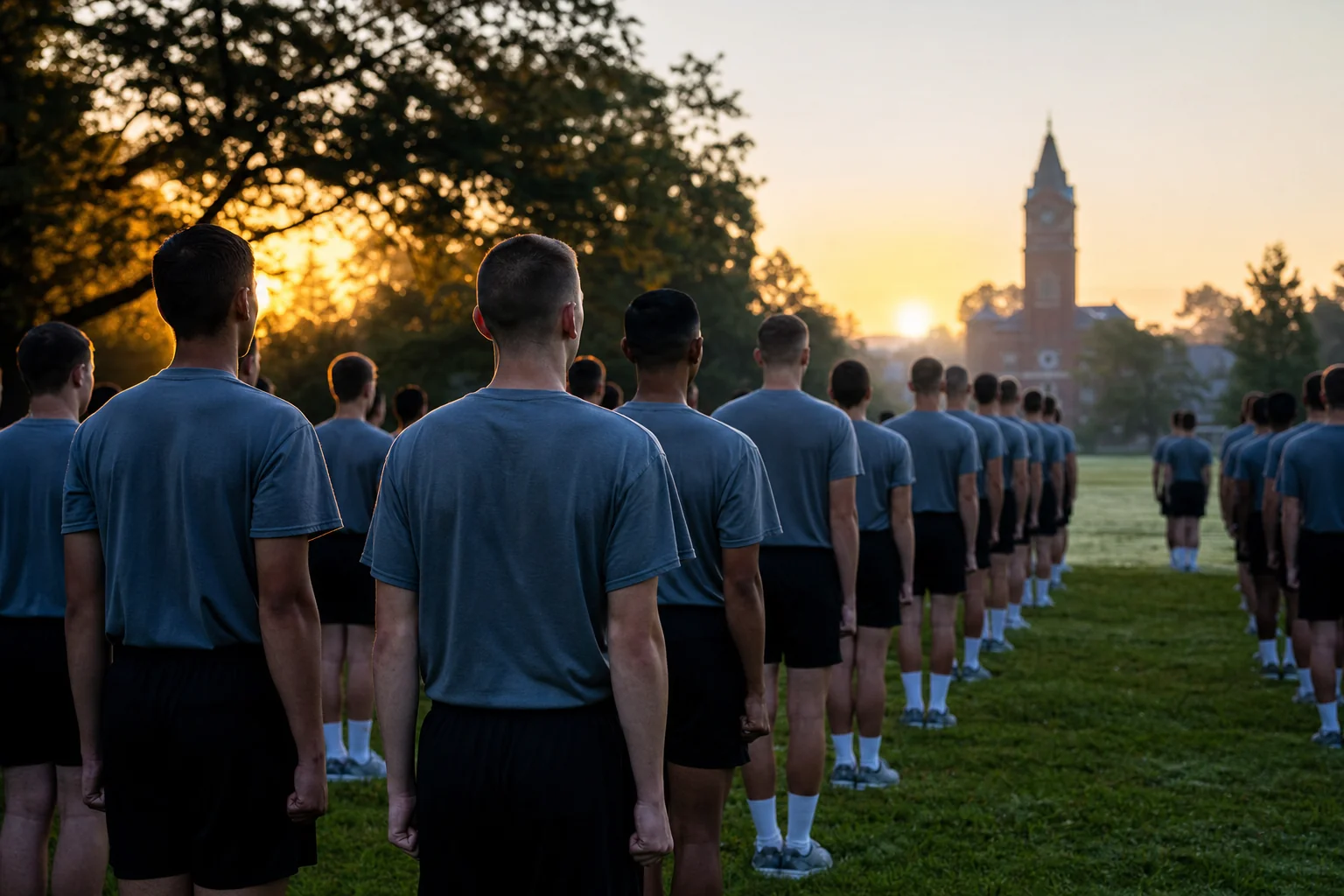
Within thirty seconds, two hundred pairs of boots hit the floor across three barracks on Fork Union Military Academy’s 1,100-acre Virginia campus. Footlockers slide. Sheets get tight. By 6:15, every cadet is on the field in PT gear, formed up, ready to run.
This is what a Tuesday at FUMA Summer Academy looks like — and it is what most parents want to see before they sign the application. Here is the day, hour by hour, from the bell tower to the bunk.
| Time | Activity | What Actually Happens |
|---|---|---|
| 6:00 AM | Reveille | Wake-up. Dress in PT gear. Make bunks. |
| 6:15 AM | Morning physical training | 45 min — calisthenics, running, mobility |
| 7:00 AM | Personal time / shower | Hygiene, room prep for inspection |
| 7:45 AM | Breakfast formation | Cadets march to Estes Dining Center |
| 8:00 AM | Breakfast | Hot breakfast, family-style |
| 8:30 AM | Room inspection | Beds, uniforms, lockers checked |
| 9:00 AM | Academic Period 1 | One Subject Plan — focused instruction |
| 10:30 AM | Break | 15 min |
| 10:45 AM | Academic Period 2 | Continued focused study |
| 12:15 PM | Lunch formation | March to lunch |
| 12:30 PM | Lunch | Hot meal |
| 1:30 PM | Academic Period 3 / electives | STEM, leadership, or enrichment |
| 3:00 PM | Snack & change | |
| 3:30 PM | Athletics | Football, basketball, swim, drill team |
| 5:30 PM | Free time | Yard activities, snack bar, library |
| 6:00 PM | Dinner formation | March to dinner |
| 6:15 PM | Dinner | Hot meal, family-style |
| 7:15 PM | Activity period | Trips, movie nights, intramurals |
| 8:30 PM | Mandatory study hall | 90 min — TAC-supervised |
| 10:00 PM | Taps | Lights out. Quiet hours begin. |
Source: Fork Union Military Academy, Director of Summer Programs. Schedule reflects FUMA Summer Academy 2026. Sunday schedule modified for chapel and rest. [VERIFY TIMINGS PRE-PUBLISH.]

The first three days, the morning is brutal. By day four, it has become the easiest part of the day.
Reveille is non-negotiable. Cadets dress in PT gear, make their bunks to inspection standard, and form up on the parade field by 6:15 for forty-five minutes of physical training: calisthenics, distance running, mobility work. The Tactical Officer — a TAC, in FUMA shorthand — runs the formation. The same TAC will be with the same group of cadets for breakfast, room inspection, and most of the day.
After PT, cadets have personal time to shower and prepare their rooms for inspection. By 7:45, they are back in formation, in uniform, marching to the Estes Dining Center for breakfast. Inspection follows.
Cadets describe the first three days as the worst. They describe the day-four morning, the morning after they realized they had survived the rhythm, as the moment something shifted.
This is the academic block, and this is where FUMA looks different from any other school in the country.
The One Subject Plan, introduced at Fork Union Military Academy in 1950, is the school’s signature academic model. Instead of dividing the day into six or seven subjects, cadets focus on one. In the school year, that means studying one course for seven weeks at a time with the same teacher. In Summer Academy, it means each session is built around a concentrated academic focus — algebra, writing, SAT/ACT prep, biology, history — taught with the depth a traditional period schedule cannot match.
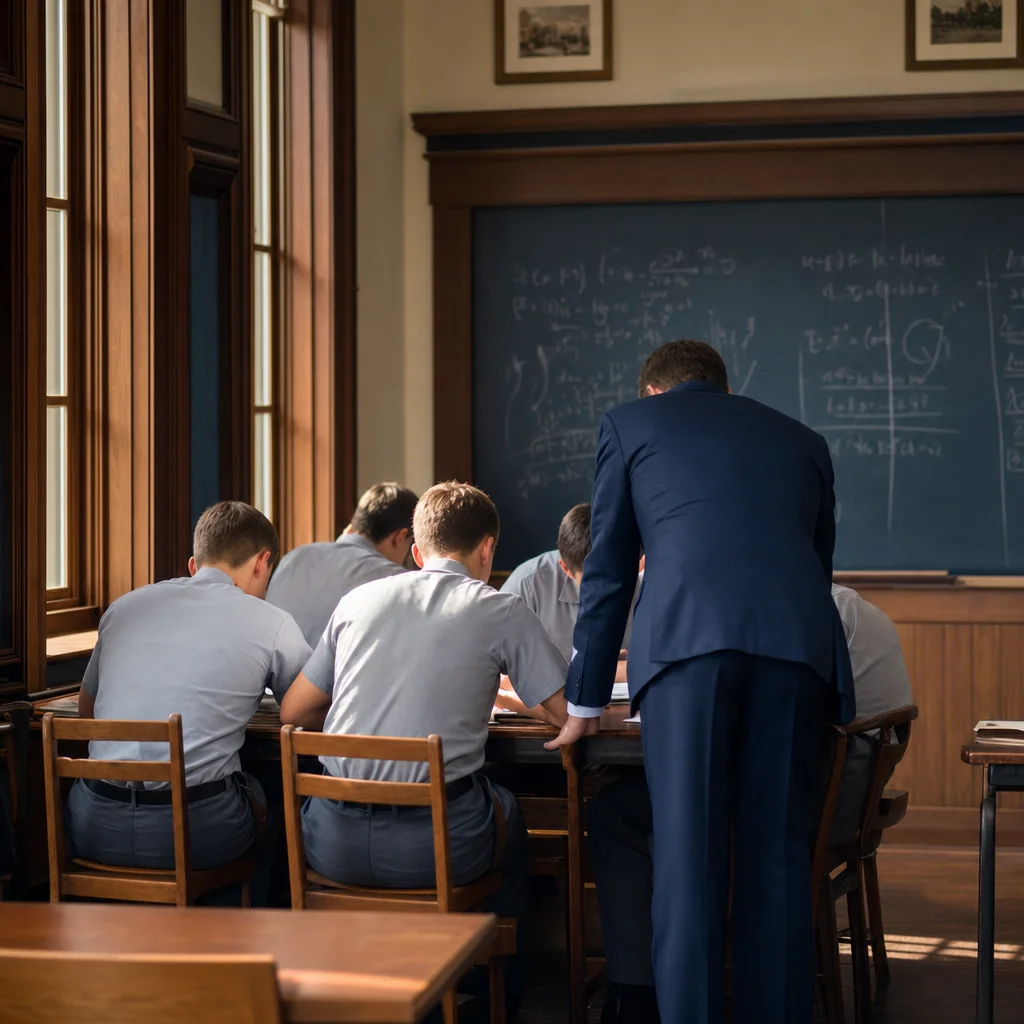
What this looks like at 9:00 AM on a Tuesday in July: ten to seventeen cadets in a wood-paneled classroom, one teacher who has been with them every day for the session, one subject on the board. No bell. No transition. Just sustained attention.
[QUOTE: One cadet, 80 words, on what focused academic time felt like vs. their old school. Procure during summer 2026.]

Lunch is in formation. Cadets march from the academic buildings to Estes Dining Center, eat family-style at long tables of eight, and have approximately an hour before returning to the third academic period. The afternoon block is often elective: a STEM enrichment course, a leadership module, an English workshop.
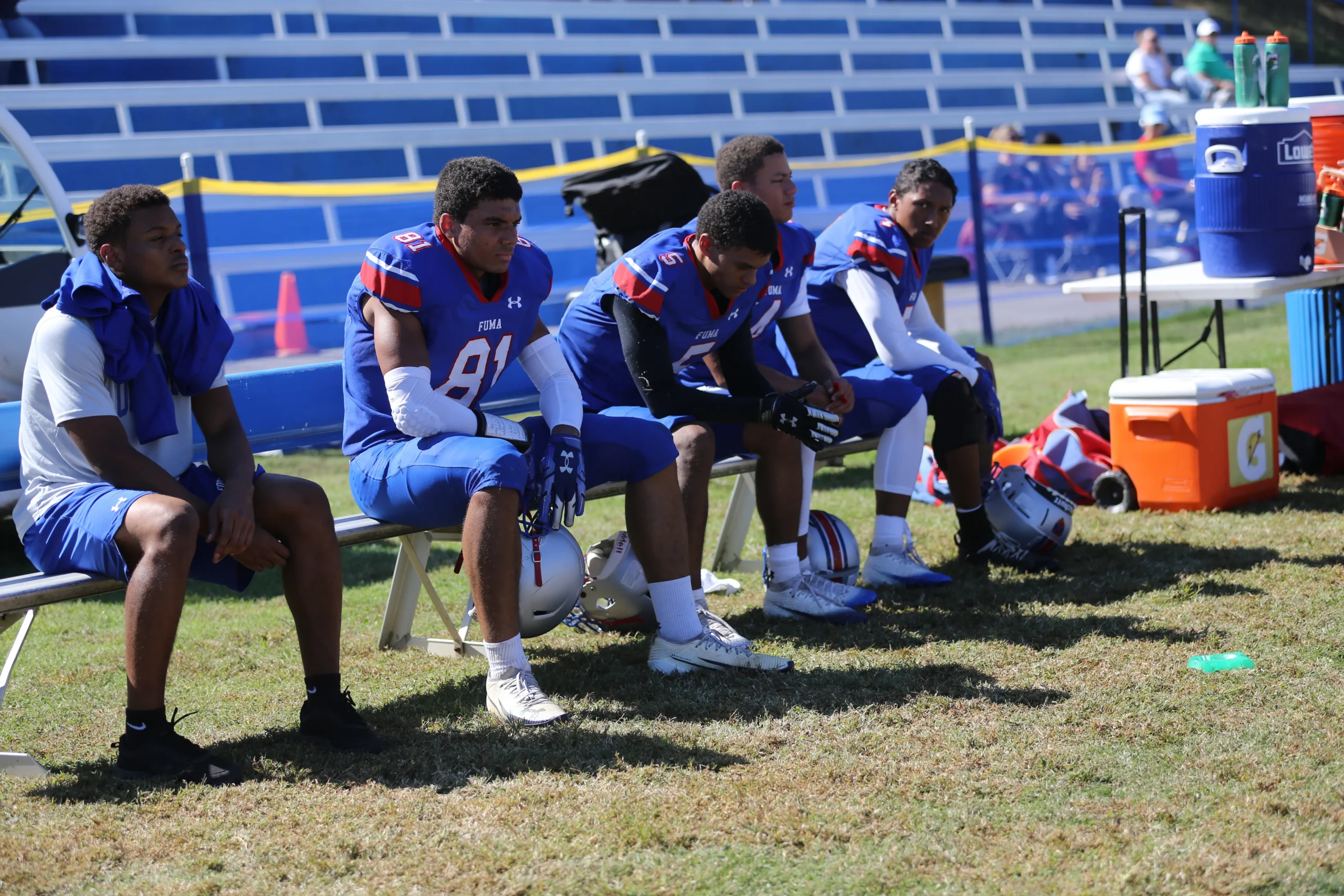
By 3:30, the day pivots to athletics. Two hours of structured sport — football, basketball, swimming, drill team, intramurals. Athletics are required at FUMA Summer Academy; the choice of sport is the cadet’s. For PG-track athletes, this block is a recruiting environment. For most cadets, it is the part of the day they did not know they needed: two hours of physical exertion in summer Virginia heat, surrounded by peers doing the same thing.
A short free-time block at 5:30 — the yard, the snack bar, the library — precedes dinner formation at 6:00.
“Free time” is the most misunderstood part of the FUMA day. It exists. It is supervised. It is mostly outside. It looks like ten boys throwing a football, three reading on a porch, two writing letters at a picnic table. The phones that ran their summer evenings at home are not in the picture.
Dinner is in formation, family-style, in the Estes Dining Center. The activity period that follows — movie nights, intramurals, occasional off-campus trips — is light by design. The structure of the day is the academic morning and the athletic afternoon. The evening is for community.
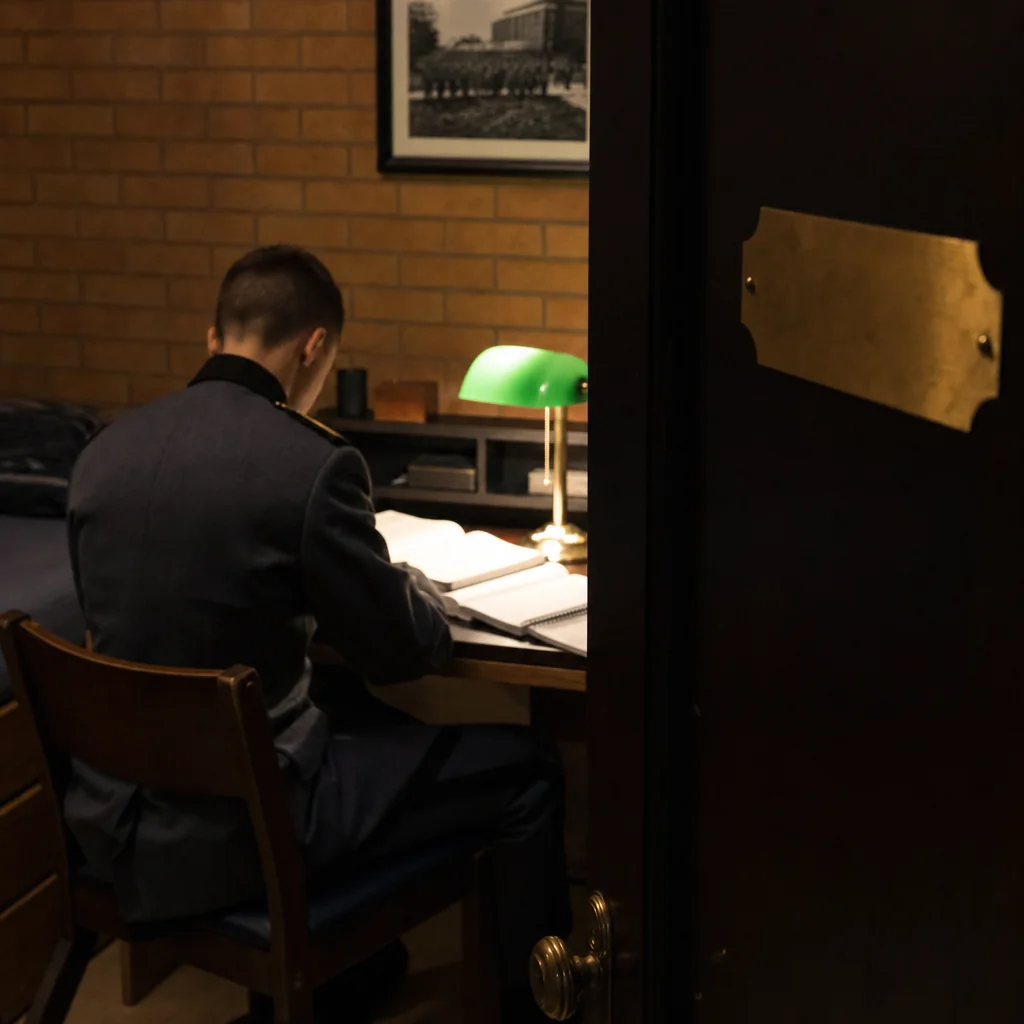
At 8:30, study hall begins. It is mandatory, TAC-supervised, and ninety minutes long. Most cadets review the day’s academic material or work ahead. At 10:00 PM, the bugler plays taps. Lights go off. Two hundred boys eventually stop talking.
The first night, the quiet is striking. By the second week, it is the most reliable thing in their lives.
For peer-authoritative guidance on adolescent sleep and structured morning routines, the American Academy of Pediatrics publishes parent guidance through HealthyChildren.org.
Saturday begins with a more thorough room inspection. The morning includes optional academic work or athletic competition. The afternoon often includes a trip off campus — a baseball game in Richmond, a hike in the Blue Ridge, a movie. Saturday evening is community-focused.
Sunday centers on chapel and rest. The chapel service at FUMA is non-denominational; cadets of every faith and no faith are welcome, and cadets of other traditions are accommodated. The afternoon is for letter writing, dorm cleaning, and preparation for the week ahead.
[QUOTE 1: Current returning summer cadet, age 14. ~30 words. Procure during Summer Academy 2026.]
[QUOTE 2: Current first-time summer cadet, age 13. ~30 words. Procure during Summer Academy 2026.]
[QUOTE 3: Current summer cadet, age 15. ~30 words. Procure during Summer Academy 2026.]
If your son is heading to Summer Academy, a four-week ramp-up at home makes the first morning easier:
Next week, we will look at the surprising tradition that brings fathers back to campus every fall — and why it changes families. [INTERNAL LINK: 03_Post_Father_Son_Weekend]
What time do cadets wake up at FUMA Summer Academy? Reveille is at 6:00 AM. Cadets are expected to be dressed and ready for morning physical training by 6:15 AM.
How much free time do cadets have each day? Most days include approximately 1.5–2 hours of free or activity time — a 30-minute block before dinner and a 75-minute activity period after dinner. Sundays include more unstructured time built around chapel and rest.
What is taps at military school? Taps is the bugle call that signals lights-out at FUMA. It plays at 10:00 PM nightly. Cadets are expected to be in bed, lights off, and quiet by the final note.
Are cadets allowed phones at FUMA Summer Academy? Cell phone use is restricted during Summer Academy. Cadets have scheduled opportunities to call home, and parents can write or email anytime. The structure helps cadets engage fully with the program.
What is the One Subject Plan in FUMA’s daily schedule? The One Subject Plan is FUMA’s signature academic model, introduced in 1950. Rather than rotating through six or seven subjects each day, cadets focus on a single course at a time with the same teacher. The result, according to FUMA, is deeper learning and higher grades.
Do cadets get weekends off? Cadets do not leave campus on weekends during Summer Academy, but the Saturday and Sunday schedules are lighter than weekdays. Saturday includes optional academic time, athletics, and trips off campus; Sunday is centered on chapel, rest, and letter-writing.
This post was reviewed by [TAC NAME], a Tactical Officer at Fork Union Military Academy.